
Alcudia, the first village
The first village was established in Alcudia, a small fishing village on the island of Palma de Mallorca in the Balearic Islands.
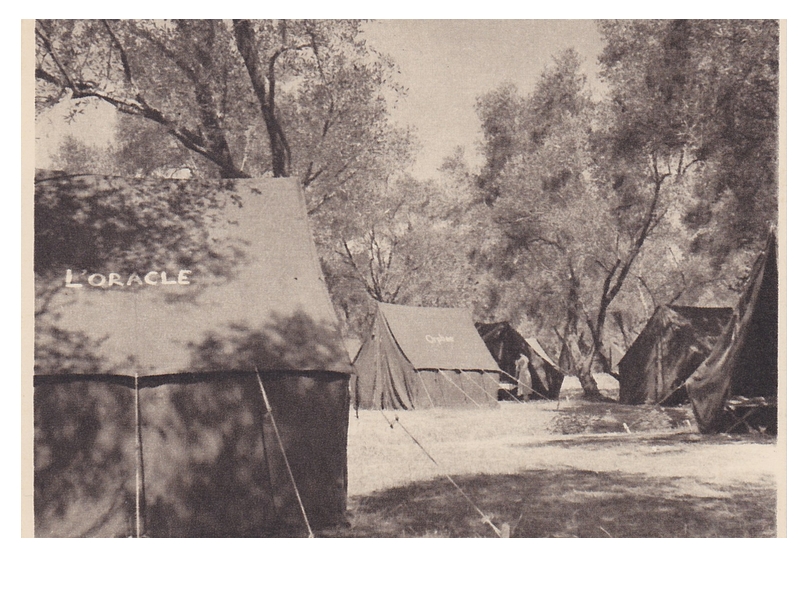
Gérard Blitz had purchased surplus American equipment. (Maurice Blitz, Gérard and Didy's father, had provided the necessary funds by selling his house in Antwerp.) The American army, stationed in Germany, was packing up and selling off its surplus. The tents, deemed too "military," were given names of Parisian metro stations, flowers, or neighborhoods in Alcudia to replace the numbers that still served as reminders that the Second World War had ended just a few years earlier.
An advertisement in L'Équipe and its Antwerp sports equivalent, along with a few posters, promoted this new holiday concept.
Member registrations—the term GM came later—were handled at 9 rue Buffaut in the 9th arrondissement of Paris by Gérard and Claudine Blitz. In Belgium, the office was located in Antwerp at 4 rue Anselme. The price for a 15-day all-inclusive holiday in the Balearic Islands was 16,800 old francs.
In the autumn of 1950, Gérard looked for a tent manufacturer to replace the Alcudia tents, which had come from American surplus. They needed to prepare for the following season. On the list of tent manufacturers he obtained from the Chamber of Commerce was the name "Trigano père et fils" (Trigano father and son) with a telephone number. The story goes that Gilbert Trigano answered the phone at the other end, as he was near the telephone when Gérard Blitz called. The company “Trigano père et fils” also became the supplier for the Village Magique club of Paul MORIHIEN in the same year.
The early 1950s marked the development of Club Med. New resorts gradually sprang up around the Mediterranean. After Alcudia, which only existed during the summer of 1950, it was Golfo di Baratti in Italy (Tuscany) that Club Med guests discovered starting in 1951. Corfu, later renamed Ipsos Corfu in 1952, Marina di Campo (Elba Island), and Becici (Montenegro/Yugoslavia) in 1953 were the association's first resorts.
1952 also saw an extraordinary experience for some Club Med guests at the Helsinki resort. This temporary resort was set up for the duration of the 1952 Summer Olympics held in Finland. In 1953, Club Med also opened the Californian Garden in the heart of Rome, just a hundred meters from the Vatican.
For the first four years, the villages (except for the Californian Garden in Rome) were tent villages, like Alcudia. The Trigano father and son company, absent from Alcudia, became Club Med's tent supplier in the autumn of 1950. Thus, Baratti, Corfu, Montenegro, Elba, and Capri would have spacious tents measuring 3 meters by 3 meters and 2.70 meters high. Amenities were grouped in areas called bathhouses or sanitary blocks, equipped with individual sinks and showers (some open, others enclosed). The early villages underwent many adaptations and various makeshift solutions, particularly in plumbing and electrical work, and sometimes improvisation was the order of the day. Some GMs (Gentils Organisateurs, or Club Med staff) even pitched in to help with the construction.
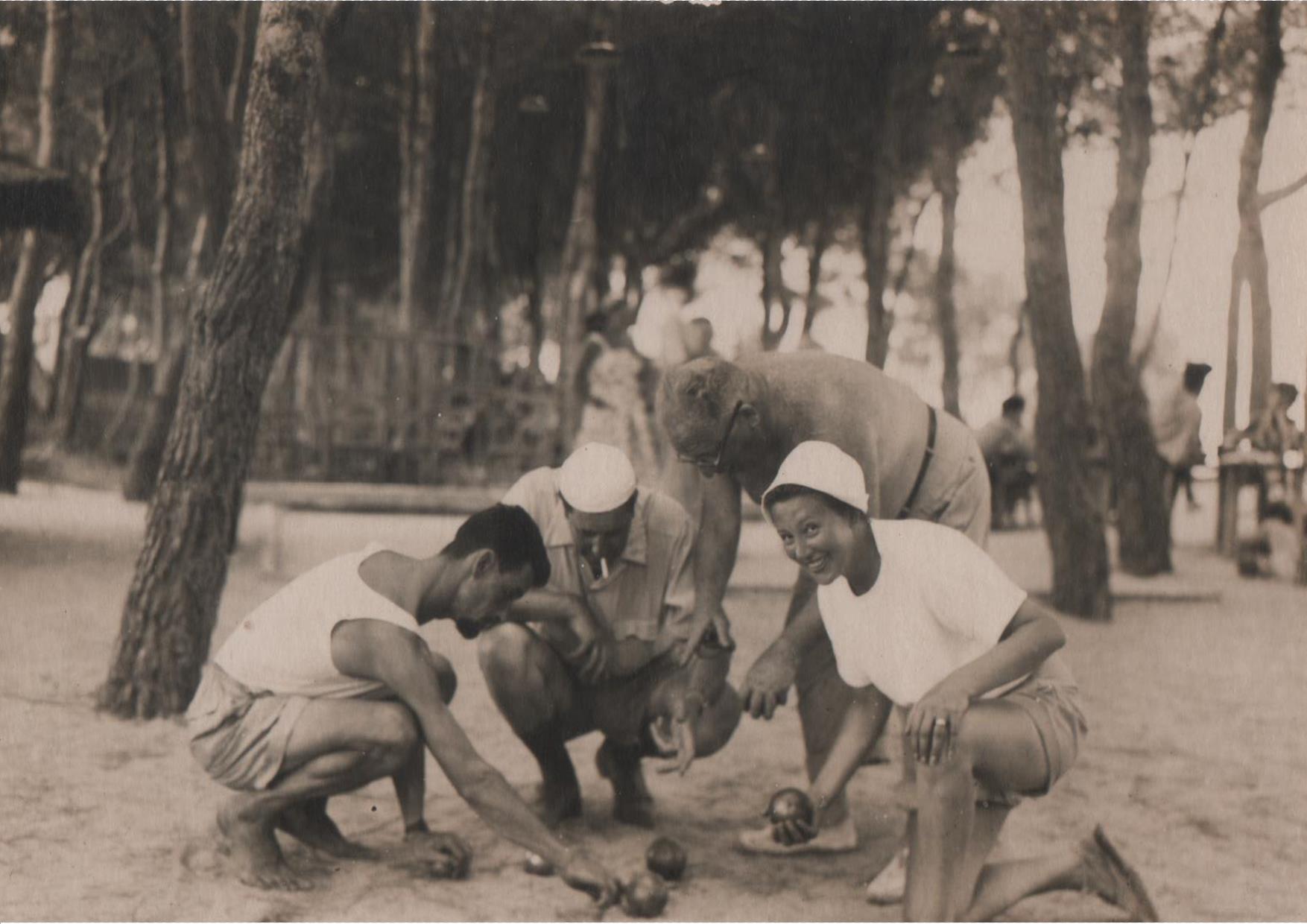
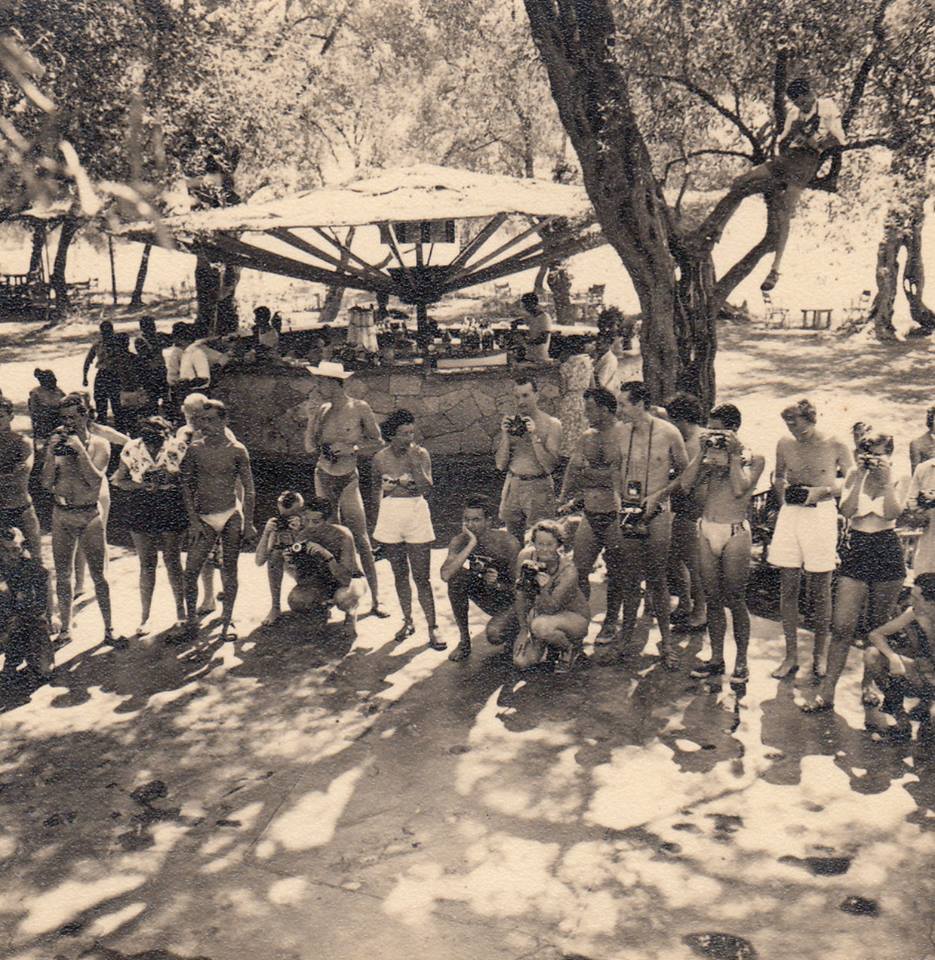
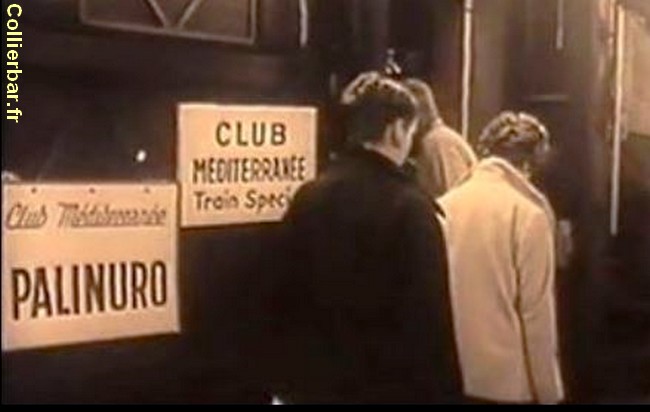
Everyone knows each other as soon as they arrive in the village, and first names are already used. It's worth noting that the transfer from Paris to the villages sometimes takes several days (two and a half days to Corfu in 1953, including a train to Venice and then a boat; a month by boat to Tahiti in 1955). This makes it easy to get to know people even before arriving in the village. This is where the restaurant's tables of eight originated. Eight because that was the number of berths in a train compartment. Water skiing and scuba diving were among the popular sports offered in these early villages. Volleyball and pétanque were also played.
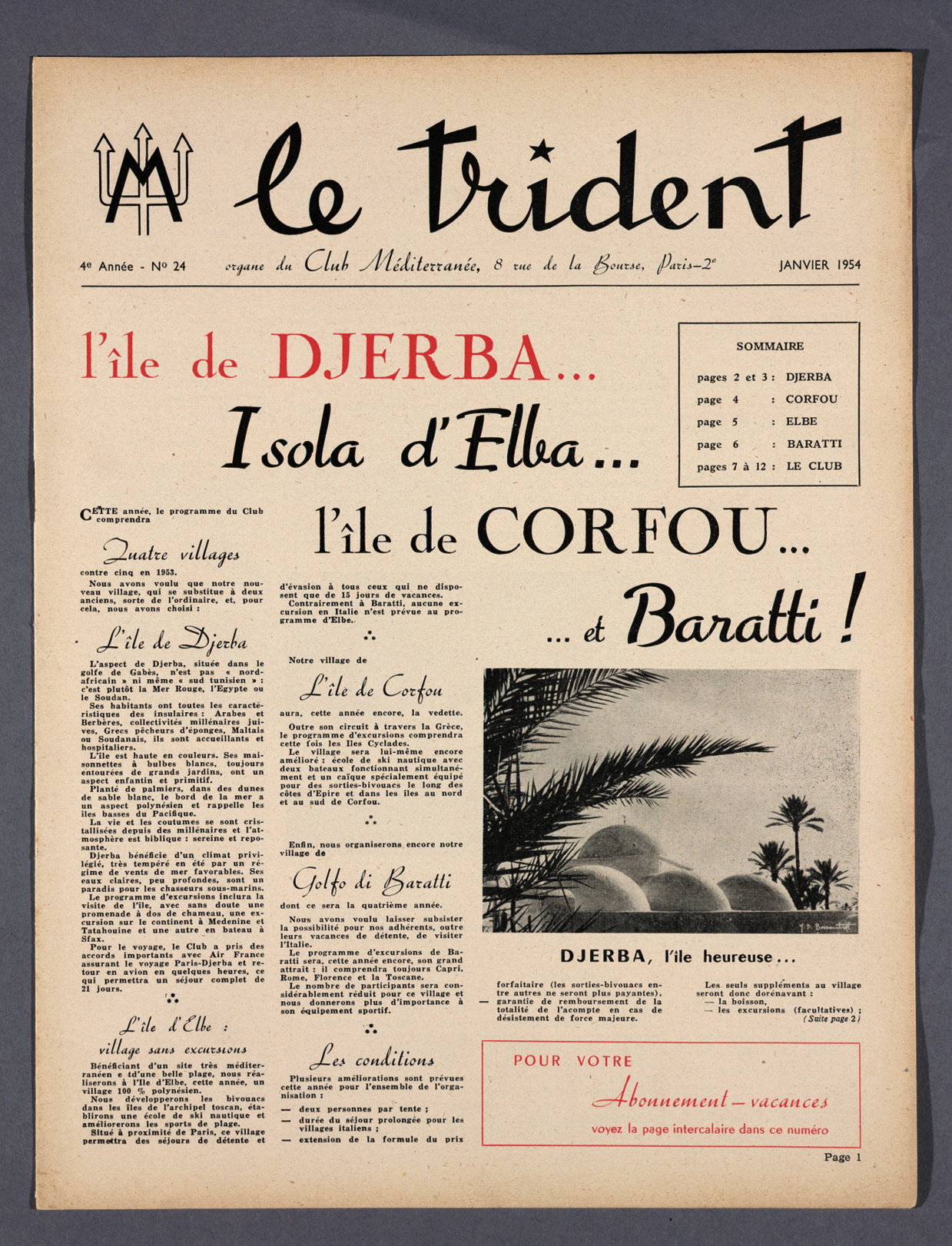
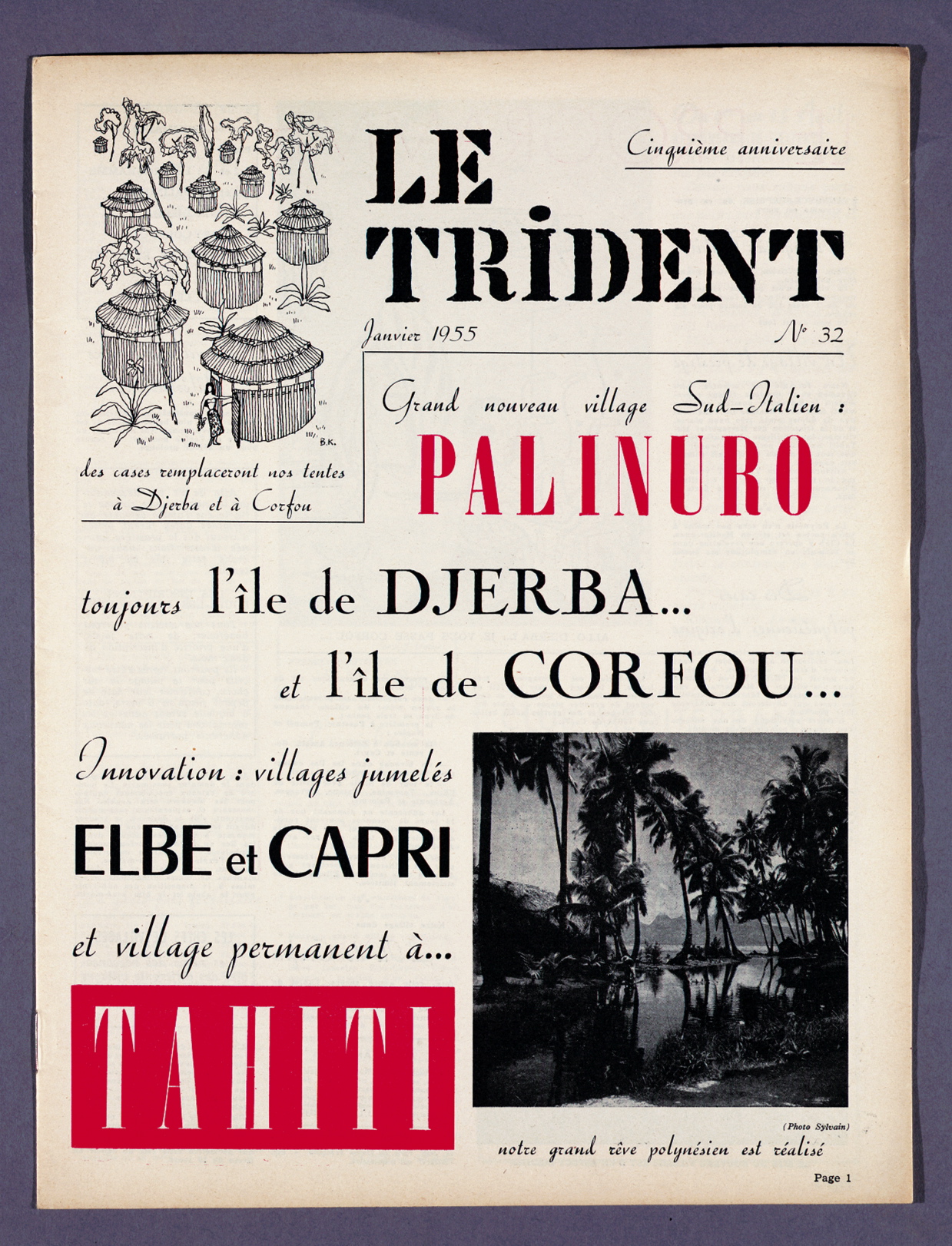
1954 was a doubly important year for Club Med. Firstly, it crossed the Mediterranean and opened its first village in Tunisia on the island of Djerba, along Seguia beach. Secondly, it also marked the arrival of the first Polynesian bungalows, intended to replace the tents that were beginning to show their age. The invention of the Polynesian bungalows is attributed to Claudine Blitz, the wife of Gérard Blitz.
The bungalows were tested in Corfu before being gradually introduced in the other existing villages.
During these early years, it was in direct competition with the Magic Village club, which was also opening tent villages in Europe, in Plansee in the Austrian Tyrol and in Cefalù, Sicily, facing the famous rock. Queues formed outside on Rue de la Bourse in front of Club Med, and the same was true on Rue de la Boétie in front of the Magic Villages. In 1950, Club Med welcomed 2,300 members (GM appeared in 1951, as did TGM, the equivalent of Millésia at the time!). Three years later, the number had risen to 7,000 GM members.
The story could have been a beautiful fairy tale, if it weren't for the financial issues. All of this is indeed very appealing, but it comes at a high price, very high price, and the finances of both clubs are becoming disastrous. Debts are ballooning, especially since the method for monitoring payments and membership fees is extremely rudimentary and leads to many oversights. Both clubs owe money to the Trigano Company for tent rentals (Trigano being the supplier for both associations), as well as to the SNCF (French National Railway Company). Gilbert Trigano was one of the key figures in the merger of the two clubs, which took place in 1955.
In 1957, the Club Méditerranée association adopted the status of a public limited company with variable capital and, in the process, acquired Club Polynésie, which had just gone bankrupt. The number of GMs (Gentils Membres - Club Med members) then rose to 22,000.
During its early years, some of the co-creators of the Magic Villages joined the Club Med association. Dimitry Philippoff joined in 1951, followed the next year by Judith Blitz (Didy). Both were promoted to village chiefs, leaving their mark on the history of Club Med.
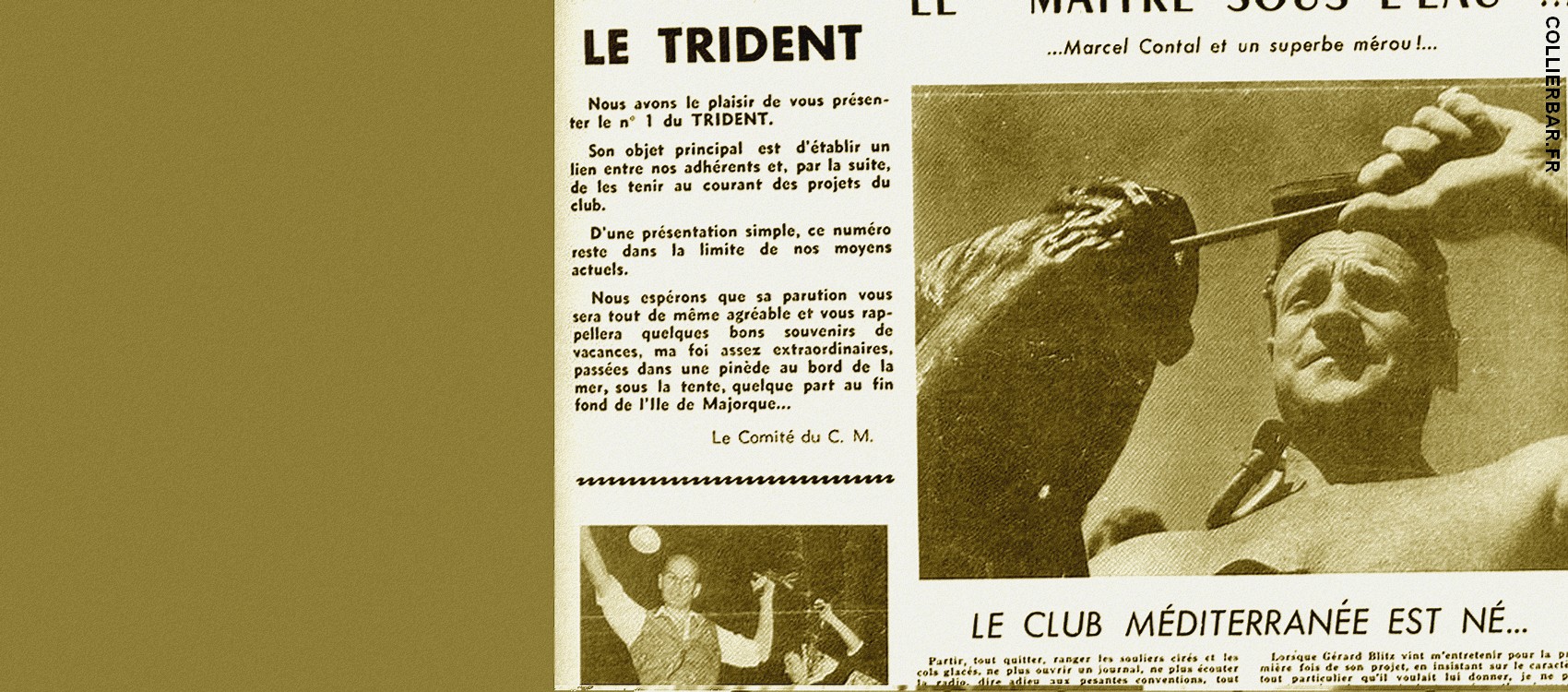
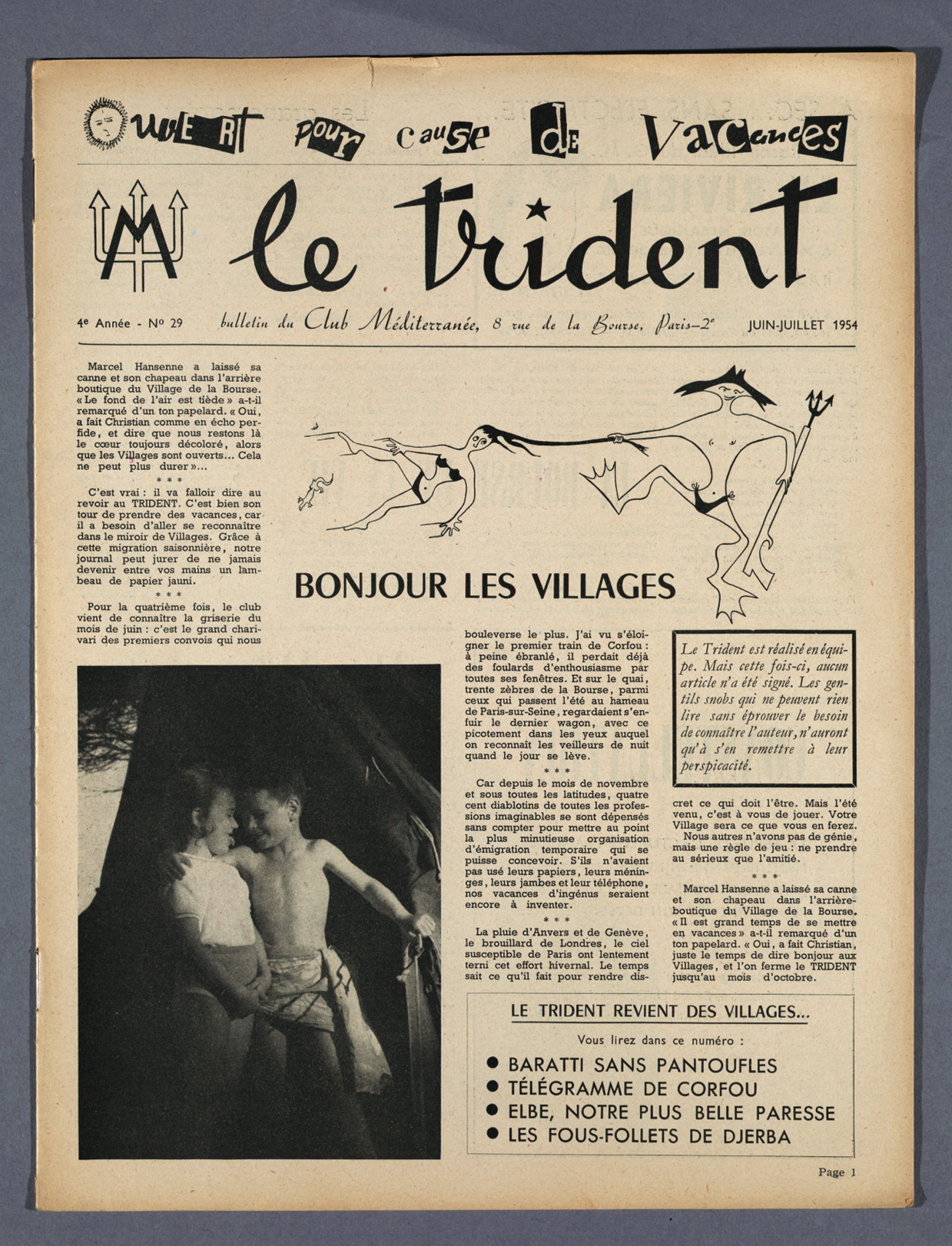
When the two clubs merged, Paul Morihien joined the team and was specifically responsible for the publication of the Trident magazine.




Videos
Alcudia 1950
Montage of photos and videos
Collierbar
Pleokatriza Corfu and Parga
films by Marcel Contal
Collierbar


Hello, I found a gem in the archives of Swiss Romande Television (RTS Archive): 1970, Villars Palace, winter season, approximately 52 minutes. With my stepfather, I used to ride in his truck because he delivered fruits and vegetables to this club. As a little boy, around 7 years old, I remember seeing the shows and films on weekends, like Planet of the Apes, as well as the buffets where the food was based on quantity and the twenty-meter-long buffet. Regards, Christophe
I'm looking for the exact address of the old Club Med in Montalivet where I went as a child (between approximately 1968 and 1970). Please let me know if you have the information. 🙂
Hello,
What a wonderful website I stumbled upon! It tells the whole story of the Club, as told to me by my mother, who, along with my father, was part of the staff at the Alcudia village. According to what I've heard, I was the first to be "decorated" with the famous trident! I was one year old at the time, and I'm 74 now. It all fits together. I had the first Alcudia village brochure for a long time, but unfortunately, it was stolen.
Sincerely,
Raymond Chevreau