
Corfu (Ipsos)
Location: Greece (Corfu Island)
Village type: Tents then huts
Year opened: 1952
Year closed: 2004
A little background: In 1952, when Gérard Blitz leased the 60-hectare property, the place was considered unlucky. Overgrown with vegetation, with only a few buildings visible here and there, such as a dilapidated old sheepfold, the place seemed rather gloomy, damp, even flooded during heavy rains, and teeming with insects. But while visiting the village, we also discovered the long cypress-lined avenue that leads to the sea. Robert Beaudin would later transform this place into a village once again.
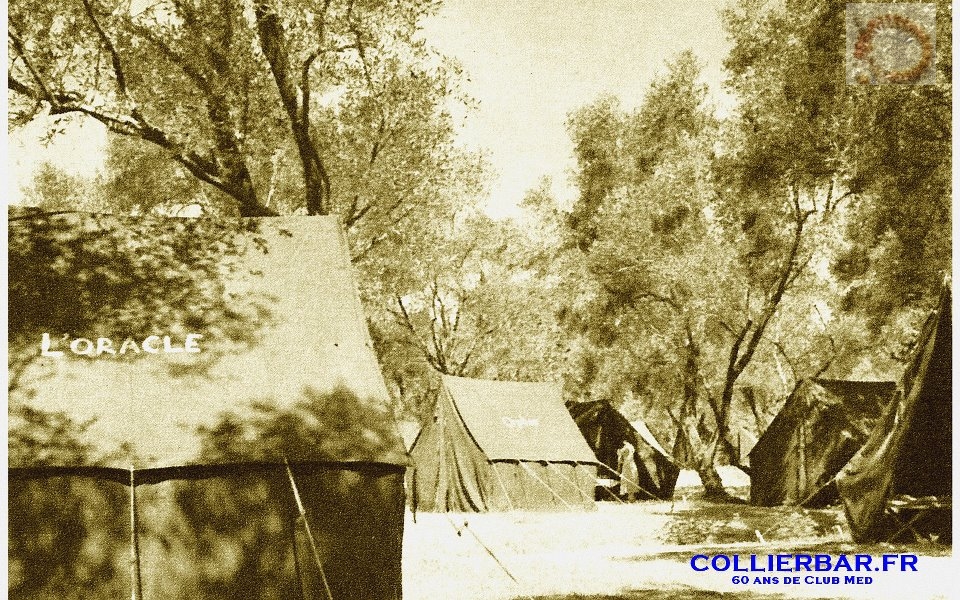
The village opened in June 1952. Tony Hatot was the village chief at the opening. Judith Blitz (Didy), after a brief stint in Golfo di Baratti, joined the resort in Corfu and became the activities coordinator. Despite a long and uncomfortable journey and numerous imperfections and inconveniences during the stay, the village was a resounding success. With a capacity of 1,000 people, Corfu became Club Med's largest tented village.
Corfu IPSOS, the first bungalow village:
Tents marked the beginning of the club, but they required annual maintenance and replacement. It was then that Gérard, on the advice of his wife Claudine, had the idea of replacing the aging tents with Polynesian bungalows. All the villages were asked to test different models.
In 1953, in Corfu, five bungalows were erected behind the bar by Jean Mahut (then head of works at the village). Their robustness had to be tested against the island's climate, particularly during the rainy season. The test was successful. During the summer of 1954, the building materials arrived discreetly under Didy's supervision and were stored near the sheepfold.
In 1955, Corfu opened with a new look. In place of the tents, the GMs discovered brand-new Polynesian-style bungalows offering considerable comfort.
The first bungalow village of Club Med was born. Until the "Agadir" revolution of 1965, it served as a model for the other Club villages that would be opened.
In the early 1960s, Ipsos had up to 7 satellite villages. Among the best known were Paléokatritsa, run by Marcel Contal, and Parga, located on the mainland and managed by Maurice Vidalin. (Maurice Vidalin would also become known as the lyricist for Gilbert Bécaud (Le petit oiseau de toutes les couleurs, La vente aux enchères) and other performers such as Marcel Amont, Barbara, Claude François, and Mireille Mathieu with Paris en Colère.).
The Journey
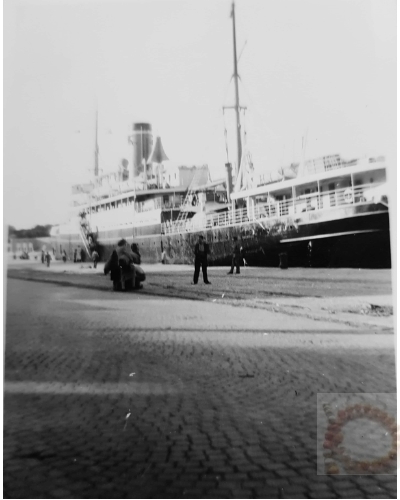
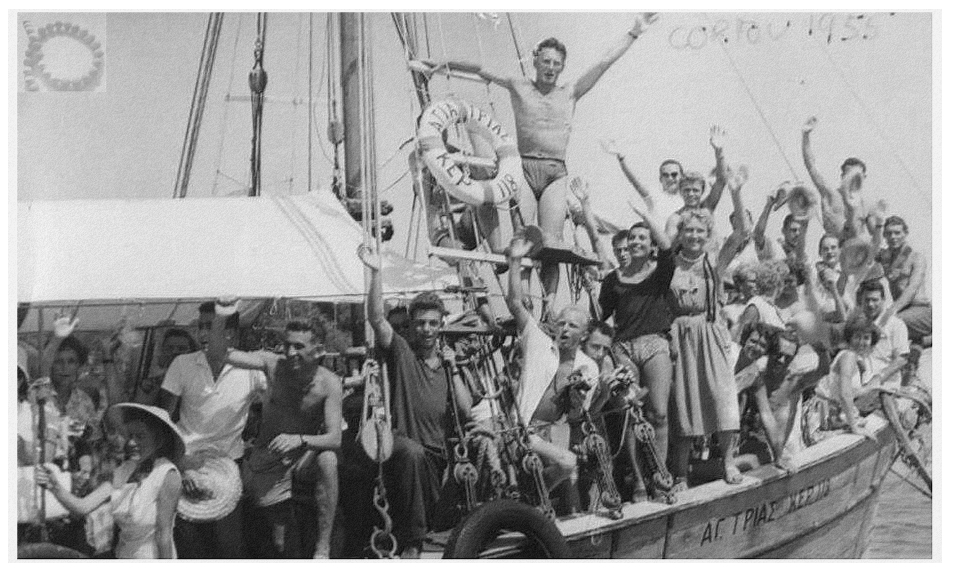
In the early years, the journey took approximately 36 hours. Members of the Club de Monaco boarded the Simplon Express from the Gare de Lyon in Paris to Venice, and then, after some free time, embarked on the SS Agamemnon or SS Miaoulis to Kerkira (Corfu Town) after a stopover in Brindisi. The remainder of the journey was completed aboard the Club's gulets, which sailed along the "triumphal route," escorted by water skiers, to the village. From 1964 onwards, the journey became shorter with the development of modern transportation, but the final 20 kilometers remained just as majestic.
The tragedy
On July 16, 1977, a dramatic event unfolded in the village. A bank robbery ended tragically with the death of Jean Maurice Picimbono, known as Narbonne, a sports retailer, who was shot by the perpetrators as they fled with the loot (over one million francs). I recommend reading "Death Is Not a Game," which recounts the robbery and the police investigation led by the OCRB (Central Office for the Repression of Organized Crime) under Charles Pelegrini, which, after 16 months of investigation, resulted in the arrest of the criminals.
The End
: It was in 2004 that the story ended, rather sadly. The economic crisis, the upmarket strategy implemented by Henri Giscard d'Estaing, and vandalism perpetrated by some young GMs forced the club to sell. Today, the land remains unused, and the existing facilities and the remaining cabins are in a deplorable state.
Throughout its history, Ipsos has been one of the Meccas of Club Med, as were Djerba, Cefalu or Caprera, and yet the site where the village was located did not initially suggest that success would follow and that the village would last for more than 5 decades.
Personalities who have left their mark on the history of Corfu and Club Med
Judith Blitz: She is Gérard's sister. Known as Didy, she was sent to Corfu in the summer of 1952 as an activities coordinator after spending a few weeks in Golfo di Baratti. By 1953, she had taken charge of the village and oversaw its transformation. Ipsos was like her own backyard. She was the village chief for nearly eight seasons before leaving to oversee the opening of the Agadir village.
Jean Weiler: You may not know this figure, but he left his mark on the history of Club Med, starting with Corfu. He was an architect and interior designer, and he worked in the Club's design office. In 1961, in Corfu, he implemented two revolutionary innovations that were subsequently adopted in other resorts: a crenellated bar, allowing for more convenient service than the existing circular bar, and tiered seating around the dance and performance area. This was the reinvented amphitheater, which is now found in every Club Med bungalow village.
Jean Weiler also designed Cadaqués, Agadir…



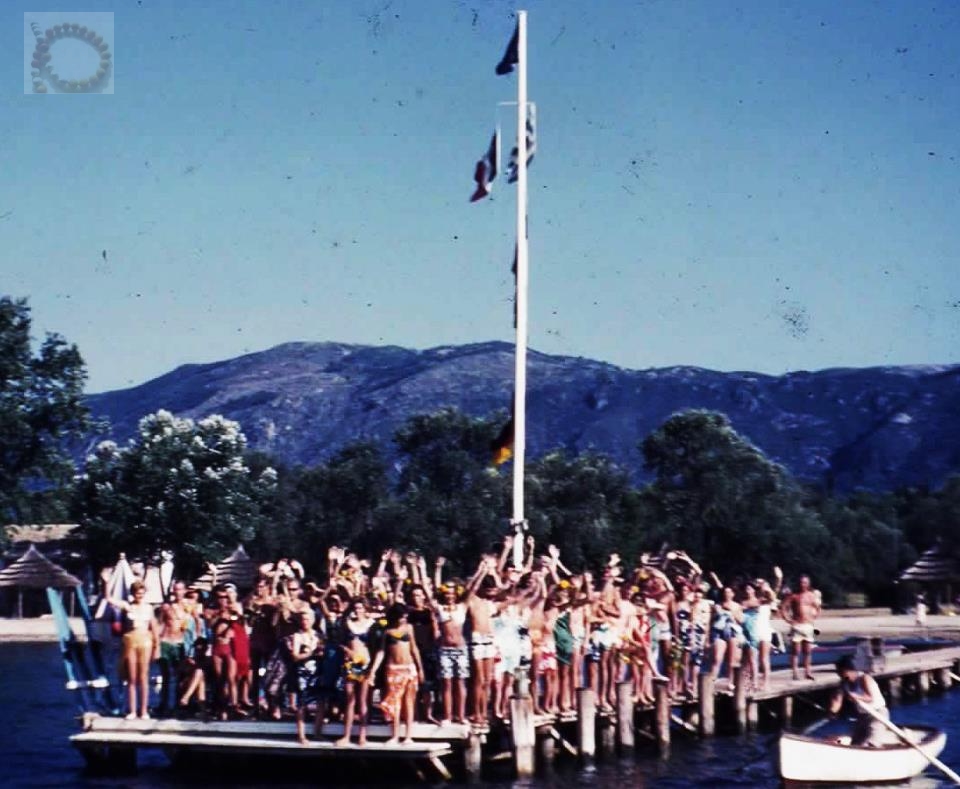

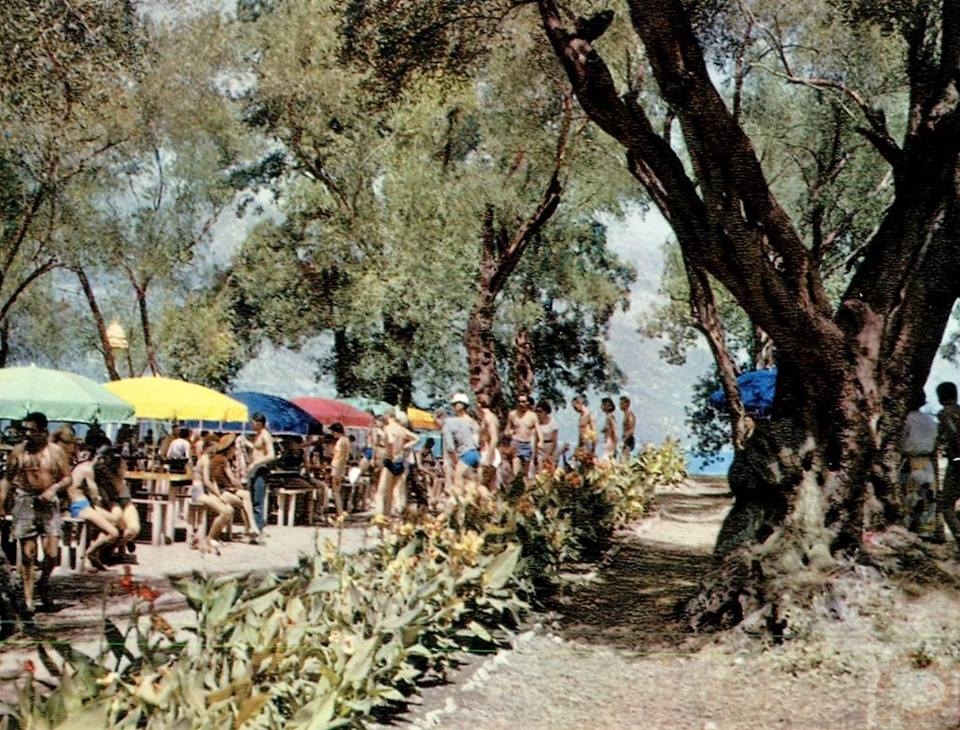


Find more media inside the gallery here
Video
Corfu 1952, a video compiled using archives from Marcel Contal.
Arrival, bivouacs, spearfishing, water skiing, excursions, festivals and folklore.
Collierbar Collection
Corfu 1962, a Pathé Newsreel 1962 French Village in Greece –
Welcoming the new GMs (arrival by caique), pétanque, bar and necklaces, beach, departure by plane (Sabena)
Editing by Gérard Pigeon Decosterd
Commercial film – Club Med
Collierbar
Corfu 1955: a video compiled using archives from the Marcel Contal
Collierbar Collection
Commercial film – Club Med
Collierbar
Corfu 1998, a video from a film shot by your webmaster,
Collierbar Collection

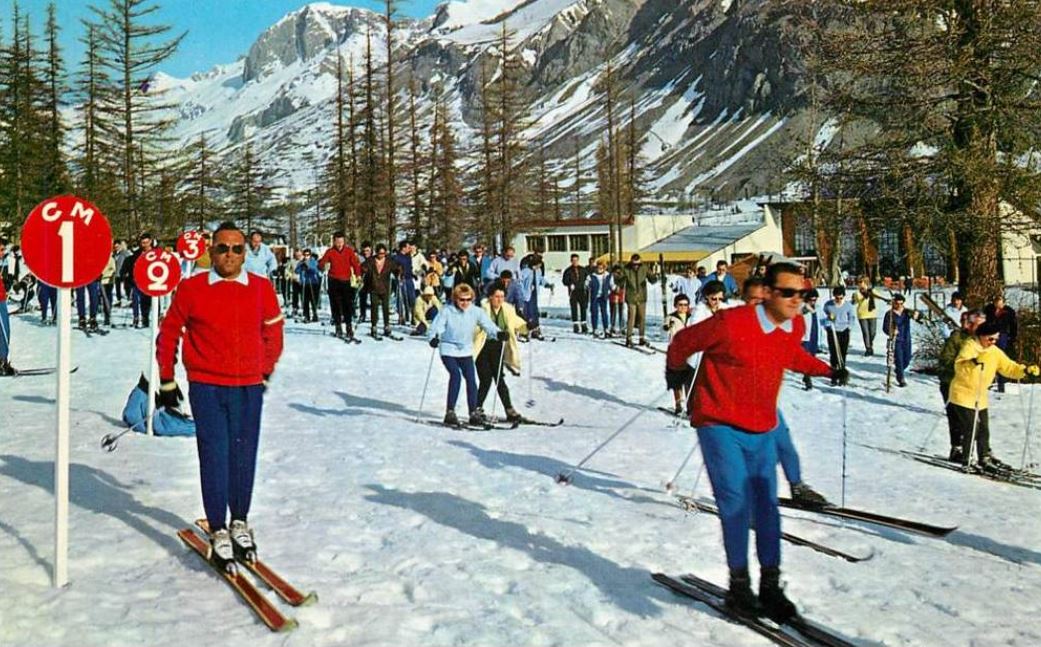

My first real vacation…three weeks in May 1962, I recognize moustache at reception, what a joy!
I spent an unforgettable three months in Corfu in 1961. I was part of a small group of Polynesians, mostly students, guests of Club Med, responsible for welcoming the guests with flowers and also providing Tahitian music in the bar. It was there that we organized the "Otéa," or folk dances, for the first time, with drums, toere, and other musical instruments for the guests. It was an extraordinary success. It remains unforgettable. Mrs. Blitz later invited us to her home in Corfu for a folk evening.
1976 – 1977 – 1984
My best years at the Club as GM! 🙂
Hello,
I've lost the cassette of the Corfu club music. Would you happen to have a copy and be able to tell me the song titles?
Have a good day.
Laurent, I was there too during the first two weeks of August 1976... Marc (water skiing) was the village chief... Jérôme
79, 80 and 81. I was about ten years old. My parents preferred the annex in Parga. Who remembers?