Fifty years later, what remains of it?
The cottage village of Caprera (Sardinia) – Part 2
The security guard—for that's what he was, of course—was a young man, dressed in black jeans and a shirt emblazoned with "VIGILPOL," which was likely the only accessory his employer had provided him. No imposing duty belts equipped with flashlights, walkie-talkies, or even pepper spray; no cap; even the car was completely unmarked. Moreover, when he protested my presence, he didn't seem aggressive, but rather polite, repeatedly saying " mi dispiace " ("I'm sorry").
Judging it harmless, I settled into my role: friendly, smiling, jovial, pretending not to understand anything in Italian, and explaining half in French, half in English, that I was a former Club member, that I was coming back here by chance, that I had wanted to see the place again, that there was no barrier prohibiting access from the beach, that I had not seen any prohibition signs (which I would later verify were indeed very discreet, or even non-existent), etc., etc.
"And you just arrived here?" he asked me.
"It wasn't five minutes ago!" I replied, instantly understanding which direction he intended to head in.
"And you didn't take any photos?" he continued, pointing at my camera.
– Oh no! I've barely arrived! I replied with disarming sincerity.
Meanwhile, he politely but firmly asked me to return to the beach and go back the way I had come. He vaguely pointed towards the track which, skirting the village, gave public access to Cala Garibaldi and the native house (guards' house?) built almost on the beach (a summer holidaymaker's dream, certainly not a pleasant one in winter!).
Furious at having been caught off guard like a child, furious at having left my car in plain sight facing the gate before even checking the beach access options, I humbly retreated, all the while sporting a broad smile and waving my goodbyes enthusiastically. It was under close supervision that I finally reached the beach, crossing the spot where, in some photos, I had seen an orange barrier, but without finding the slightest trace of it beneath my feet.
On the beach, I strolled around a bit (I had to play the part of the "discoverer" with conviction), taking in with a moved look this place which was at once so familiar to me, and suddenly so inaccessible, since now there was a security guard! I was frustrated, very unhappy, and I couldn't even let it show.
 The Club's bay, with its two islets and, to the left, the sailing clubhouse.
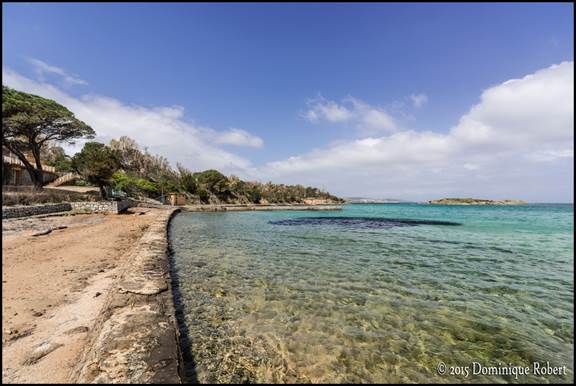 Nothing has changed!
I expected there to be barriers; but there weren't any. A security guard, however, was a completely different story! Disappointed, I retraced my steps along the sandy, stony, and uneven track that led from the beach to the road. The first thing I needed to do was get back to the car and think about the situation, and for that I had a good kilometer to cover; I might as well get on with it without delay, since there was nothing more to do here for the moment, and I had to continue to ostentatiously play the role of the duly reprimanded visitor who leaves with his tail between his legs. My security guard, in fact, kept a close eye on me, but I soon vanished from his sight.
This short walk through the Sardinian scrubland, which was fragrant on this spring morning, gave me the opportunity to take some photos of a biotope that was clearly much richer and more diverse than what one could perceive in the heart of summer, when the heat crushes everything.
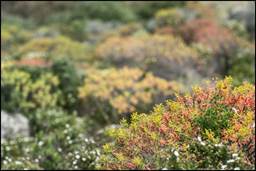 A glimpse into the Sardinian "maquis"
I reached the car. It hadn't been damaged, but it was certainly its presence that had caught the guard's attention. Perhaps he'd simply been making a routine patrol to the gate and, finding a "non-local" vehicle parked behind a bush, had been prompted to drive around the village, just in case! And there I was, daydreaming in the sun in the middle of what used to be the restaurant, caught like a duck!
To give myself time to reflect on the situation, I went to the south of the island, towards Due Mari and Cala Andreana, which I had also planned to photograph. However, to my surprise, these magnificent beaches appeared completely covered with the small, dried-out marine plants that the Mediterranean washes ashore, and therefore held little photographic interest. So, here too, before the season, the beaches needed to be cleaned of what nature deposited there during the winter! I had never known this, having only ever visited these beaches in the summer, unlike the beaches of Brittany, which I have frequented in all seasons and whose every facet I know.
After all that walking and walking, it was 1:30 PM. The Italians must have been having lunch. I hadn't seen many people since the morning, but now I was completely alone. It was now or never. Tomorrow, I would leave for Oristano, where my hotel was booked. It was impossible to stay any longer, and equally impossible to leave without retracing my steps as an adult, without revisiting the sailing club, the dock, the bar, the dance floor—in short, all the places where the heart of the village beat.
Come what may, after all, they weren't going to put me in prison, were they? For starters, I could walk along the sea, that was a right guaranteed by law, surely, in Italy as in France?
So I retraced my steps, determined. This time, I took the track leading to Cala Garibaldi and, as I approached the beach and the house there (which was, in fact, quite inhabited), I moved with the caution of a snake, hiding the Peugeot in a side path, facing the right way for a quick getaway if necessary, getting out without slamming the door, and preparing my camera equipment in advance so I was ready to shoot instantly. Then, I made my way to the beach along a circuitous route, staying out of sight of the house as much as possible, making sure no one had spotted me, and waiting several minutes scanning the pine forest, hidden behind a rock, before venturing out into the open.
Person.
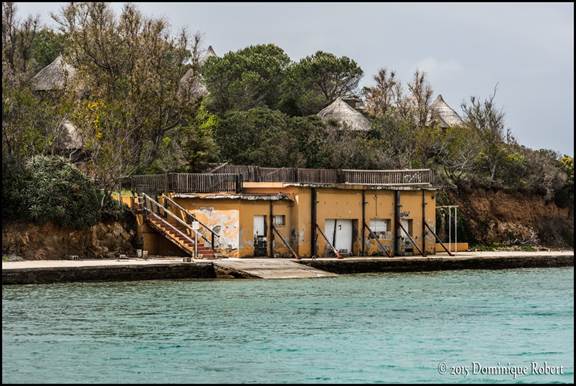
Taking care to stay close to the water, so as not to be suspected of wanting to enter private property, I walked towards the small jetty. What had been the diving hut was in a rather sorry state, surrounded by filth brought in by the sea and giving off an unpleasant odor.
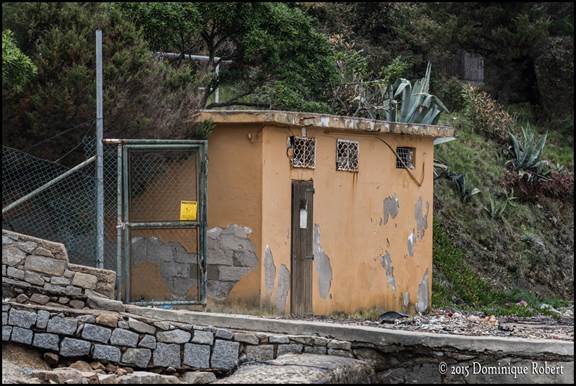 The diving hut
The path up to the bar was blocked by a low fence and a " Private Property" . Nothing would be easier than climbing over it when the time came. Nevertheless, I continued along the sea towards the sailing hut.
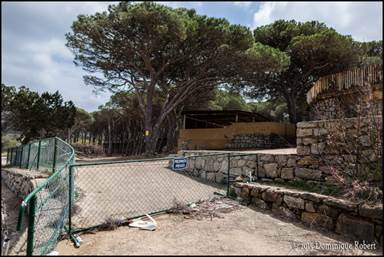
I was truly entering what had been my domain. I walked slowly along the quay where, long ago, the cradles of straps used to carry the dinghies after each outing stood, along with the concrete ramps used to launch them. Some of the wooden crossbeams that allowed them to be placed on the concrete without damaging the hulls were still there, but most had disappeared.

Above all, the quay was completely empty, desolate, with a Haussmannian width now that no boat was moored there. The water retained that perfect transparency that made it possible to spot sea urchins and avoid stepping on them, and as everywhere, the silence weighed like a leaden cloak.

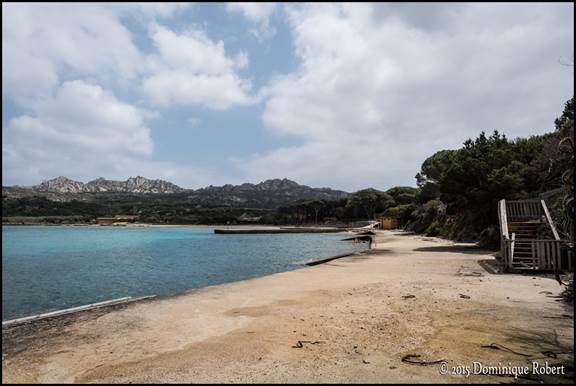
Halfway along the quay, a staircase provided access to the huts that cascaded down this sort of promontory, at the base of which the quay wound its way. This staircase was blocked and appeared to be in poor condition. Nevertheless, it would, in the worst-case scenario, offer easy access to the rest of the village.
I finally reached the sailing clubhouse which, like most of the village's brick buildings, seemed to be in particularly poor condition, so much so that its facade was shored up along its entire length to prevent imminent collapse. The staircase leading to the roof terrace, where, sheltered by reed screens, I had once spent so many happy moments dreaming of my future voyages on all the world's seas, was eaten away by age and rust, to the point that I didn't dare venture up there.
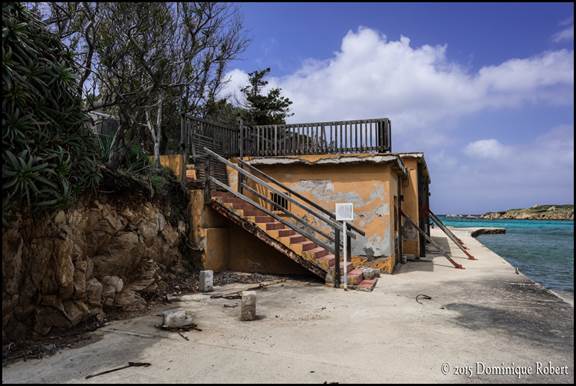 The sailing cabin
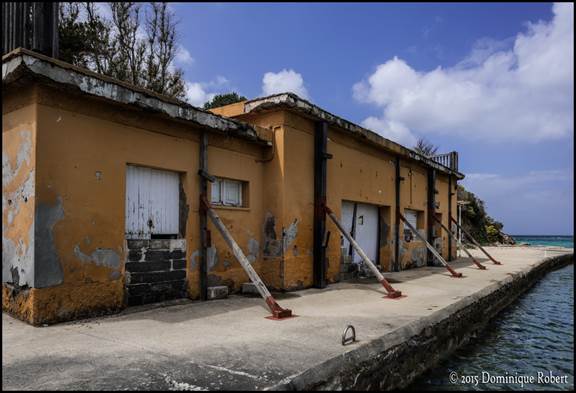
Contemplating the decay, and already near ruin, of this place that had been for me, first an almost unattainable Mecca, then a familiar haven where I had learned so much and experienced so much, was a painful moment. Why had this village had to die? Why could vacationers no longer be satisfied with what a simple village of huts could offer?
I imagine that I held part of the answer within myself, I who had chosen, upon coming to La Maddalena, to stay at the Excelsior hotel, which proudly displayed its four stars!
Nevertheless, when I placed my hand on that same half-door of white-painted wood against which, almost 50 years ago, I leaned to distribute the sail bags to the GMs, I furtively crushed a tear of nostalgia, for that past was also, and had been for a long time, gone forever.
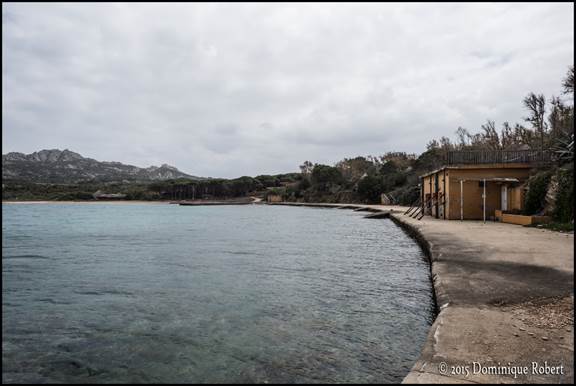
I went to the end of the pier, where some new developments had been made since my time. Abandonment, and soon death, no doubt, reigned. I returned slowly, along the water whose crystalline transparency seemed immutable, fresh as on the first day, as at the dawn of humanity. The wicket gate where I used to open as a child had a narrow opening through which I slipped my lens, flicking out a flash. I couldn't get into the sail locker, which was securely closed: no breaking and entering, unless absolutely necessary, that's my principle; at least I brought back an image which, although it is unclear and does not deserve to be included here, made me see and relive past moments as if it were yesterday: the pattern imprinted in the cement of the floor, the way the walls were painted, their recesses, down to a bit of rope, a Caravelle or something else, which was always lying on the ground, forgotten there since 2007, but which could already have been there, at the end of the summer of 1968!
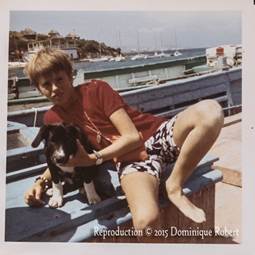 Caprera 1968: the author with the puppy of the caique Cucciolo ("puppy" in Italian)
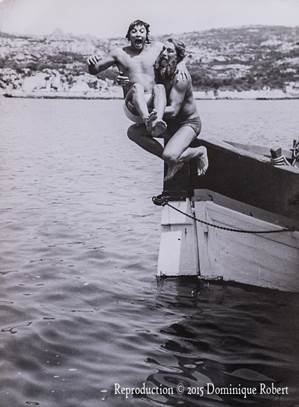 Caprera 1968: Jacky the presenter in the arms of Czopp, head of sports
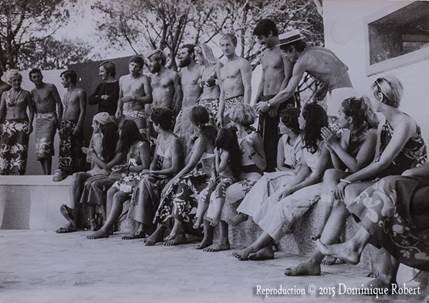 Caprera 68, GO presentation: my friend Røden-Pascoli is the tall, red-bearded man in the background, to the right of the long-haired blonde.
With a heavy heart, I gently closed the door on my past and retraced my steps to the foot of the ramp leading up to the bar. I hesitated for a moment, looked around, then made up my mind and quickly stepped over the flimsy fence. Here too, everything was aged, rusted, eaten away, in a state of mineral and metallic decay.
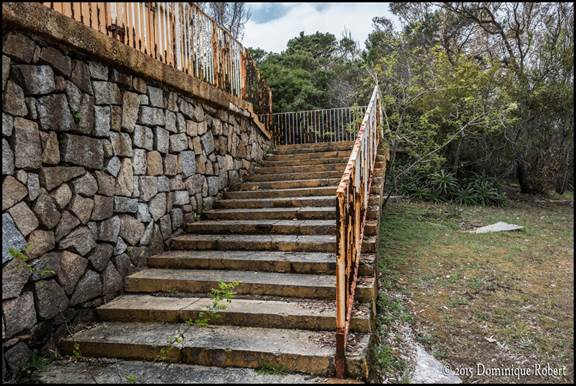 The staircase leading up to the bar's terrace
A few moments later, I emerged onto the terrace overlooking the bay, a magnificent, wild and peaceful viewpoint, open to all, cup of coffee or glass of grappa in hand.

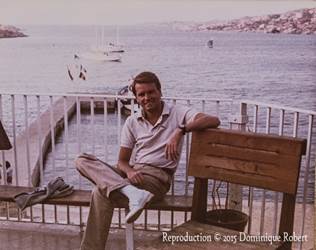 Caprera 1981: the author in the village in a GM.
The varnished wooden bench that ran along the railing, and on which my mother had photographed me, was no longer there, but otherwise, nothing had changed. Everything was falling into ruin, that's all.
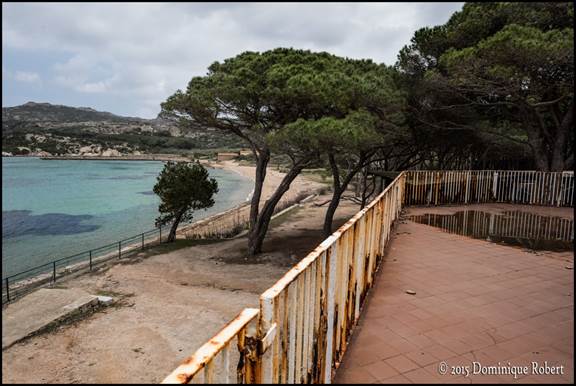
I turned back towards the bar, still recognizable with its wood-paneled bottle shelves, but which was also threatening to collapse, offering a rather melancholy sight. A large, clear plastic garbage bag lay in a corner, abandoned there since the closure eight years earlier.
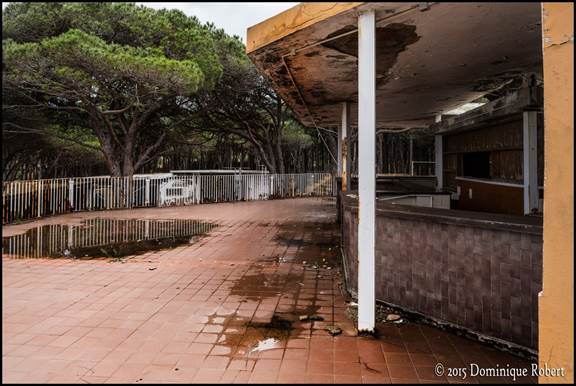
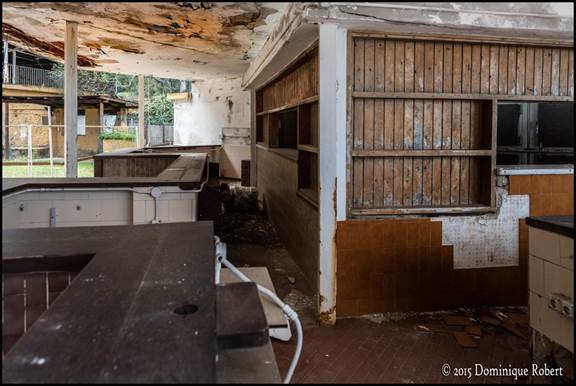

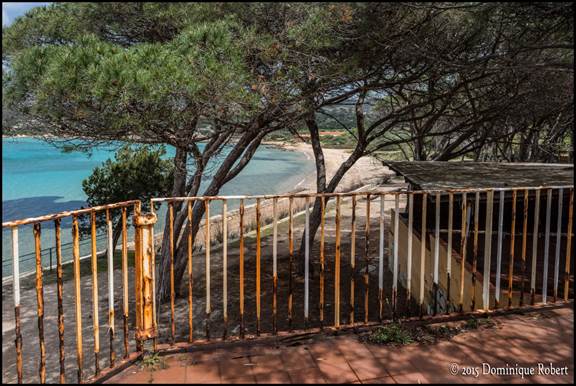 Compare this photo to the one below: between them, 47 years
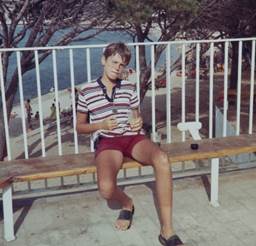 Caprera 1968
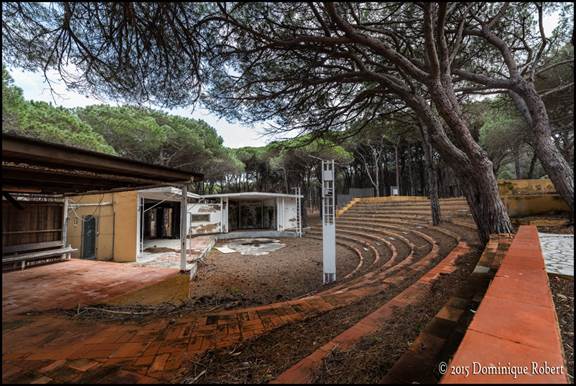
I took a few more steps. Before my eyes now unfolded, below, the amphitheater, the dance floor, the orchestra platform, the stage where thousands of shows had been performed before hundreds of thousands of GMs—in short, the place where, every evening and throughout those years and decades, the heart of the village beat! But that heart had stopped beating long ago, and from the depths of my childhood memories, I could hear only the almost muted echoes of applause, songs, and comic speeches that had amused and moved young and old alike throughout their wonderful holidays!
There were only ghosts here, whose diffuse outlines I could discern moving on the stage, behind the instruments of the orchestra, on the stands! These ghosts played, sang and clapped their hands, but it was only in my head, for in truth there reigned an absolute silence, even more oppressive than elsewhere because it was here that there had been the most joy, exuberance, pleasure of being together, carelessness of tomorrow.
All of that had vanished forever into the mists of time. I could retain the memory of it, but nothing more.
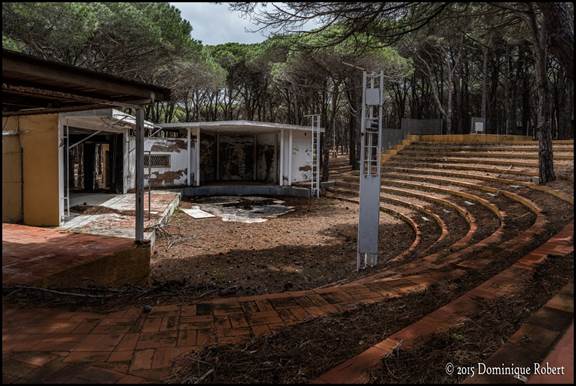
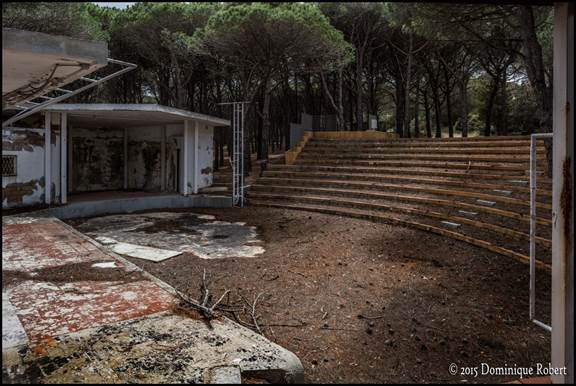
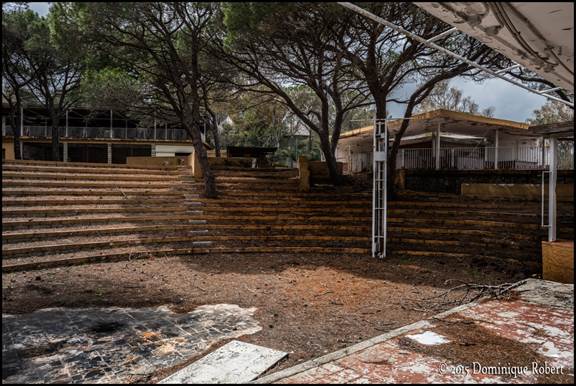

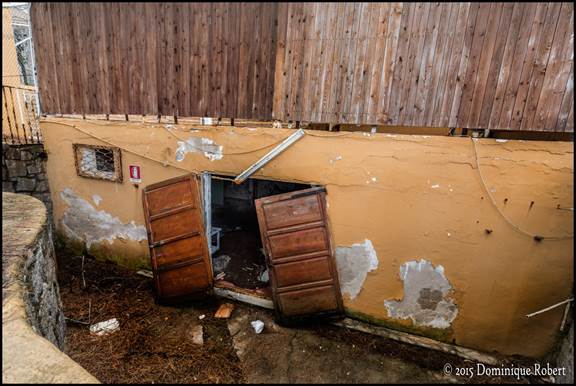 The entrance to the animation, gutted by vandals who certainly found nothing inside worth breaking down!
I also noticed that over the years, a number of works had been done here. Apart from the predictable effects of that wonderful invention, the precautionary principle, which had caused railings to spring up here and there, reed roofs had been added where previously only the shade of pine trees had been provided, and enclosed storage spaces had been built, probably for the animation sets, which were quite cramped in their original walls, I remembered.
Continuing along the path to complete the loop that led me back under the pine trees, I noticed, next to the hostesses' cottage (now a permanent structure), another rather large building (see photo below), with a sort of covered courtyard on the ground floor and a roof terrace on the upper floor. I had never seen this building before, and I couldn't guess what it was used for! Perhaps someone who has stayed in Caprera more recently than I can enlighten me!
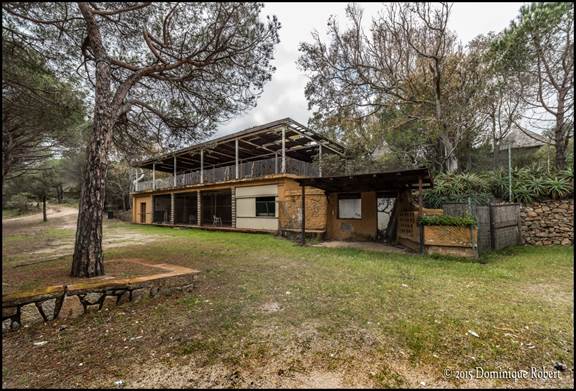 The mystery building
To complete my visit, I then headed towards the hut districts located beyond the bar, on the promontory of the sailing hut. This was the last area I had "inhabited" in Caprera.

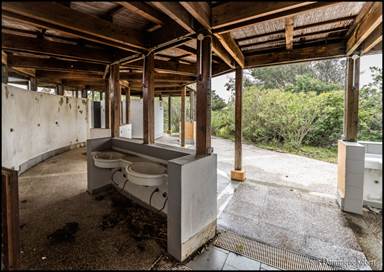
I couldn't find "my" cubicle, for lack of remembering its name, but I did find, with amusement, "my" bathroom. The washbasins were no longer the same shape, but apart from that, everything looked terribly alike.

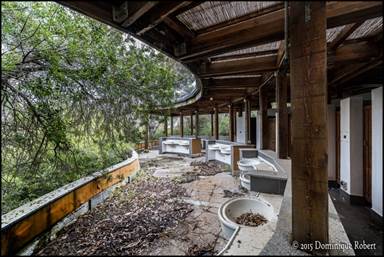
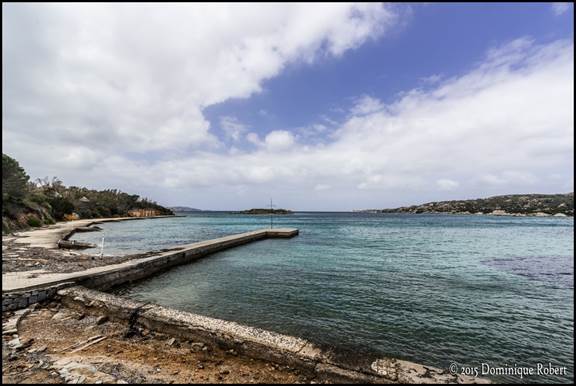
I then walked back down to the beach and, as a farewell to the village, I strolled to the end of the pier, where I used to play with the little black dog belonging to the caïque Cucciolo, who took the boats out to sea every day, except on departure and arrival days, when he ferried the GMs to and from Palau. Nothing had changed on this bare concrete pier either. From there, the view encompassed the entire village, the mountains, and the fort where we sometimes camped overnight. I knew I had to soak in this view and these memories, because it was certainly the last time in my life I would come here, and then, as all things must come to an end, I slowly made my way back to the beach.
 The village jetty
 The sailing area from the end of the pier
 The thatched huts of the Mini-Club
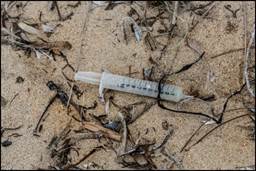
I had barely set foot on the beach, in "authorized" territory, when my friend the security guard, having finished his delicious lunch prepared by his mother, reappeared in his black Fiat. I gave him a big smile, waved to him like an old friend you meet, as expected, always in the same spot, showed him an old syringe lying on the sand, and left without looking back after greeting him in my best Italian, which left him speechless since he had thought I only knew how to speak good morning .
Did he suspect that my camera, my eyes, and my heart were full of memories freshly harvested within what was, I imagine, the private property of the La Maddalena Archipelago Natural Park? I don't know, but I hope for his sake that he followed the instructions with that fatalistic common sense that makes up a good part of Italian wisdom: chase away intruders when we see them, if that's our job, and when we don't see them, well, we're not paid enough to be on high alert day and night, are we?
END
What an emotional experience to read about this pilgrimage… I was in Caprera in
It was so moving to see these places again in such a state. I was there in 1972 as a GO (Gentil Organisateur) in charge of sail maintenance, and I also gave Optimist sailing lessons to the kids…
I just set foot on the beach at the club, on June 17, 2022. My parents, who have been passionate about it since 1954 and who introduced me to it in 1957 in Cefalu, had shown it to me in August 1966. Like you, the beach guards made it impossible to get in. It's heartbreaking when you remember what this paradise used to be ♥️
What a wonderful memory! You've taken me back 21 years. I was the traffic manager at Caprera in 2004. It's always sad to see a Club Med village abandoned in such a magnificent location.